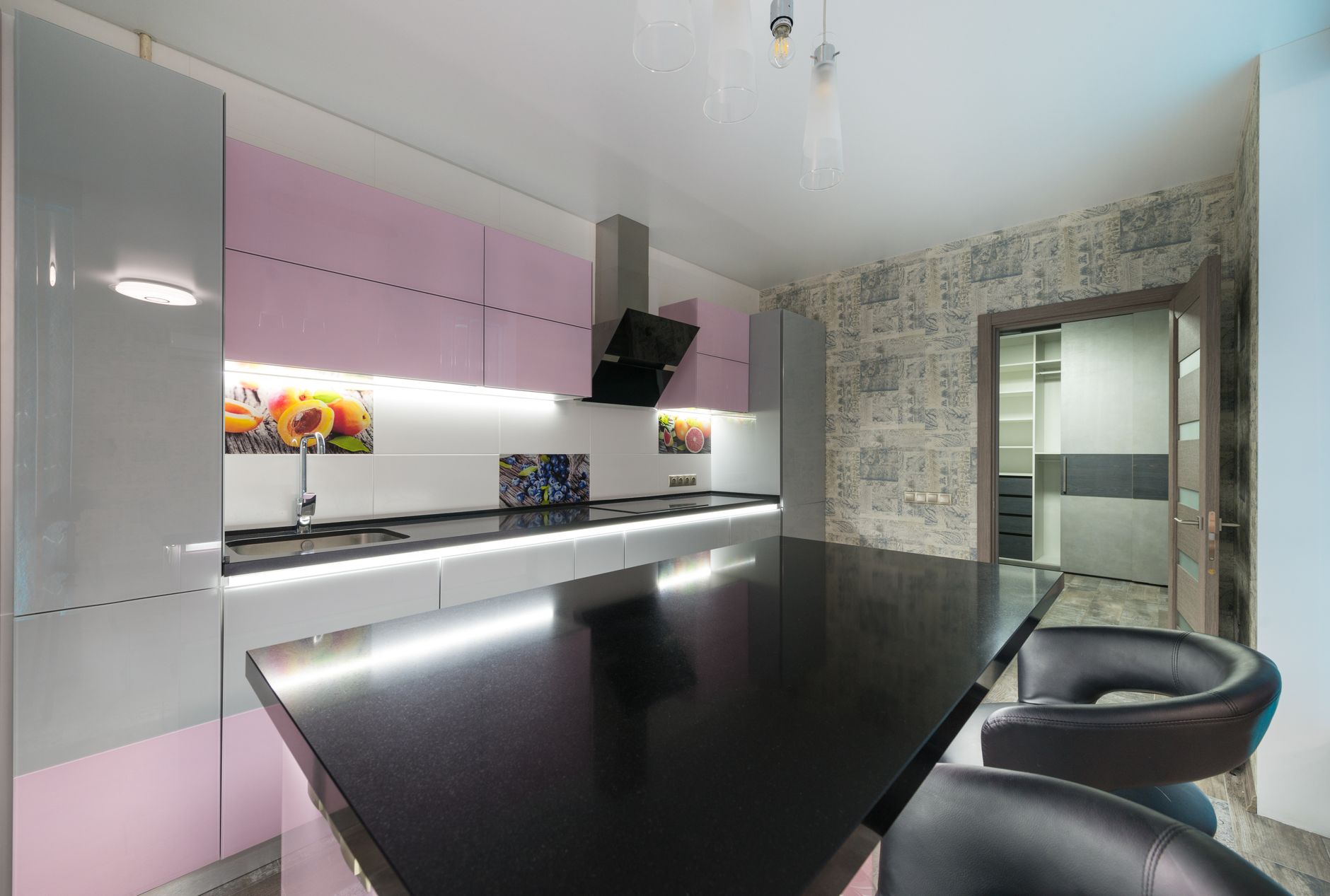
Custom Countertops in Austin, TX
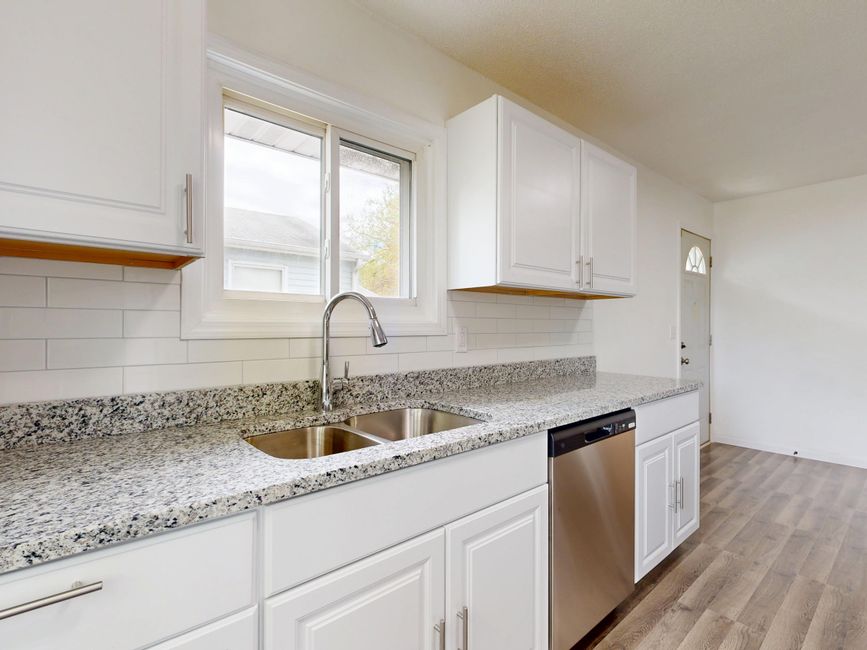
Material notes on custom countertops in Austin, TX, covering granite, quartz, quartzite, marble, solid surface and butcher block, plus heat, sun, sealing and clay soil.
What We Cover
- Butcher Block and Solid Surface for Older Austin Houses Why wood and solid surface suit some bungalows in Hyde Park and Clarksville, and how each wears over the years.
- Countertops Near Sunny Windows in Austin Heat How long hot summers and direct sun through glass affect quartz, resin-based surfaces, natural stone and wood.
- Granite or Quartz for an Austin Kitchen How granite and quartz compare for a busy Austin kitchen, from how each handles hot pans to how each takes a spill.
- Marble and Quartzite in Austin Homes What marble and quartzite do differently on a kitchen counter, including etching, staining and how the surface ages.
- Sealing Natural Stone Countertops in Austin Which stones need sealer, how to test whether a counter still needs it, and what the limestone-country water leaves behind.
- Slab Thickness and Clay Soil Movement in Austin How shifting clay soil under east Austin houses affects slab thickness, seam placement and edge choices on stone counters.
Custom Countertops in Austin, TX
A countertop job in Austin starts with the room, not the catalog. The crew measures the cabinet run, checks that the boxes are level, and notes where the sink, the range and the dishwasher sit, because those three decide where a seam can go. From there the work moves to a template, a slab pick, fabrication in the shop, and an install day that usually takes a few hours once the old top is out.
Choosing the Material
Granite, quartz, quartzite, marble, solid surface and butcher block each behave differently in a kitchen. Granite shrugs off a hot pan, quartz wipes clean without sealer, quartzite resists acid, marble etches under lemon juice, and wood can be sanded and oiled back to new. Direct afternoon sun through a west window, which is common in houses from Tarrytown to Mueller, changes which of these makes sense beside the glass.
Austin Conditions That Matter
Summers here are long and hot, and rain arrives through the whole year, so counters near big windows and patio doors get more punishment than the same slab would in a milder place. Underneath, the ground splits in two. West of the Balcones Escarpment the soil sits on limestone and moves little, while to the east the shrink-swell clay lifts and drops floors, which is why seam placement and slab thickness get more attention on that side of town.
Neighborhoods and Houses
Bungalows in Hyde Park and Clarksville often have cabinets that are not quite square and walls that are not quite straight, so tops are scribed to fit. Newer builds near Downtown Austin, Zilker and Travis Heights tend to have taller cabinet runs and larger islands, where overhang support and the span over the dishwasher come into play. Houses on the shores of Lake Austin and Lake Travis often add big glass that changes the light on the counter all day.
Guides
The pages here walk through granite against quartz, marble against quartzite, what strong sun does to different surfaces, how to test and renew sealer, when butcher block or solid surface suits an older house, and how clay soil affects slab thickness and seams.
Latest Guides
Choosing Countertop Materials for an Outdoor Kitchen in Austin
2026-10-06
Outdoor kitchens are common on patios from Tarrytown to the hills above Lake Travis, and the counter is the part that takes the most punishment. It sits in direct sun through long Austin summers, gets rained on in every season, and now and then meets a hard freeze that most of the year seems far away. Picking the material for that counter is a different job from picking one for an indoor kitchen. The questions below are the ones that come up most often.
Which countertop materials hold up outdoors in Austin?
Granite is the safest answer. It is a dense igneous stone with no resin, so sun does not fade it, and rain does not harm it. Quartzite is a close second when the slab is genuinely hard. Porcelain slabs, which are fired at very high heat, also do well outside because they are nearly non-porous and carry their color all the way through the body of the slab. Concrete can work, but it needs a sealer and renewed protection to keep it from staining and cracking.
Why is quartz usually kept indoors?
Quartz is crushed mineral bound with resin, and resin does not like long exposure to ultraviolet light. Left outdoors under direct sun, the surface can yellow, chalk or lose its sheen, and the color can drift from the way it looked when it was installed. Manufacturers generally describe quartz as an interior surface for that reason. A covered outdoor kitchen under a solid roof is a gray area, and a counter that gets direct afternoon sun is a poor fit.
Can butcher block or solid surface go outside?
Butcher block outdoors is a maintenance project. Wood swells in wet weather, shrinks in dry heat and grays under sun unless it is oiled often, and a board left uncovered near Lady Bird Lake or any humid spot can cup within a season. Solid surface is made from acrylic or polyester, so it softens and fades under strong light. Both belong under a roof, as a prep surface at most, never as the main counter beside a grill.
What does heat do to an outdoor counter?
A counter beside a built-in grill is exposed to two kinds of heat, the radiant heat of the grill and the heat of the day. Dark granite can feel hot to the hand by mid-afternoon in July, and a pot taken off a side burner can go straight onto it without harm. A light, thin material can crack from sudden hot spots, particularly if the slab is unsupported over a long span near the grill cutout.
Marble handles heat fine, but it etches from the acids in citrus, wine and some marinades, and an outdoor counter sees plenty of those. Honed marble hides the marks better, though most people who pick it outside accept that it will change over the years.
How much does a freeze matter?
Austin gets a freeze roughly every two years, and it usually lasts a night or two. That is mild compared with northern climates, but it matters for stone that can hold water. Water that soaks into an open pore and freezes expands, and over time that can flake the surface. Dense granite and porcelain absorb very little. A porous limestone or an unsealed travertine absorbs more, and it is a poor choice for a counter that stays wet.
Seams deserve a thought as well. A seam that is open to rain should be filled and sealed so water cannot sit in it, and the cabinet base underneath should be built of materials that do not rot, such as masonry or stainless steel, since wet wood moves the counter.
What about sealing outdoor stone?
Granite and quartzite outside need sealer more often than they do inside, because the surface sees spills and rain without cover. A water drop test tells when. Put a drop on a clean spot, wait fifteen minutes, and look. If it has darkened the stone, the sealer has worn through. Ask the fabricator which sealer suits a surface that will be rained on, because indoor sealers are not always made for that.
- Test the surface with a drop of water once a season.
- Wipe spills from grease and wine the same day.
- Keep a cover or umbrella over the counter when the patio is not in use.
- Use a neutral cleaner, because strong acids and alkalis damage a sealer.
What edge profile works outside?
A softly rounded edge, such as a bullnose or an eased edge, is the safest choice. A sharp square edge is easy to chip, and outdoor kitchens see more bumps from chairs, coolers and trays. A thick, built-up edge looks substantial and also adds protection to the front of a thinner slab. A waterfall edge looks striking but puts a vertical stone face in the weather, so it needs a firm base and a well-sealed joint.
Does the cabinet base matter as much as the stone?
It matters just as much. A counter on a poorly built base moves, and movement is what cracks stone. East of the Balcones Fault the soil is clay that swells in the wet months and shrinks in a dry stretch, so a base poured on that soil needs a proper footing. A base built over limestone, west of the fault, sits steadier. A slab foundation, a level pad and a frame that does not hold water are all part of getting a long life out of the counter.
Where does a sink or a cooler fit?
An outdoor sink needs a drain that runs somewhere and a supply that can be shut off before a freeze. The sink cutout is a weak point, because the cut edge and the corners collect stress. A rounded corner radius and a continuous piece of stone around the cutout avoid the cracks that start in sharp corners. An undermount sink gives a clean line, though a drop-in is simpler to service in a place that sees weather.
What about the color and finish?
A lighter color keeps cooler under sun and hides dust, while a dark color shows water spots and pollen but hides grease. A honed or leathered finish gives grip and hides scratches better than a high polish, and the texture reads well outdoors. A polished finish looks excellent on day one and shows every ring from a glass in the afternoon light.
How should the choice be made?
Start with where the counter will sit. A spot with a roof and shade has more freedom than a spot with open sky and west sun. Then pick a dense, non-porous stone or a porcelain slab, check for a proper cabinet base, and plan the seams so none of them falls over a grill cutout. The rest is taste.
A counter that is built this way will look the same ten summers from now as it does on the day it is set.

How to Inspect a Stone Slab Before It Is Cut for an Austin Kitchen
2026-10-06
A slab yard in Austin looks like a library of stone, with full slabs standing on steel racks in rows and a forklift idling somewhere behind them. Most of the decisions that decide how a countertop will look in ten years are made in that yard, in about twenty minutes, standing in front of a rack. This is what to look at when a slab is leaned out for inspection, and what each thing means once the stone is on the cabinets.
Why look at the whole slab and not a sample?
A sample is a hand-sized square cut from somewhere in the slab, and it is chosen because it looks good. Granite, quartzite and marble are natural stone, and a single slab can run from nearly plain at one end to heavily veined at the other. A two-inch sample cannot show that. The full slab shows where the dark clusters sit, where the veins run, and which part of the stone will end up across the sink and which part will end up beside the range.
Quartz is different, because it is manufactured. The pattern is repeated from slab to slab within a production lot, so a sample is a fair picture of the whole. Even so, two lots of the same color can read slightly differently, so slabs for one kitchen should come from one lot.
What is a fissure, and is it a defect?
A fissure is a natural crack line, usually a thin, dark, hairline streak that runs across part of the slab. It formed while the stone was cooling or under pressure. Marble and some quartzite carry them often, and many are only cosmetic. The question is whether the line is a fissure or a fracture. Run a fingernail across it. A fissure feels smooth, because the stone fused back together as it formed. A fracture catches the nail, and it can open further when the slab is lifted.
Fabricators handle slabs with the fissure line in mind. A slab with a fissure is usually laid out so the line falls in an area that will be cut away, such as a sink cutout, or sits at a spot with solid support underneath. A fissure that crosses a long, narrow strip is the one to avoid, such as the section between a cooktop cutout and the front edge.
How do pits and open grain show up?
Many granites, and some soapstone and quartzite, have small natural pits where a mineral grain fell out during polishing. Filled with resin during finishing, they are invisible from standing height. In raking light, with a flashlight held low and flat against the surface, they show as tiny dots. A few are normal. A dense scatter across the area beside the sink is worth a second look, since that is where water and oil collect.
Open grain also affects sealing. A slab that darkens quickly when a drop of water is placed on a clean corner is porous, and it will want sealer on a regular schedule. A slab where the water beads and sits is dense. The yard will usually allow a drop of water on an edge or offcut, and the result takes a minute to read.
What does a flashlight and a low angle tell you?
Stand at one end of the slab and look down its length with the light behind you. Ripples, low spots and dull patches show up that are invisible head on. Polished stone should look uniform, with no cloudy or hazy areas. Haze usually means the polish was uneven or that the stone has already etched in storage, which happens with marble stored near a leaking roof or a wet floor.
Check the edges of the slab as well. A chipped corner on a rack is only a problem if it falls inside the cut lines. Fabricators lay out the pieces with the damaged area in the waste, so a small corner chip means nothing for a finished kitchen run.
How does the template change the choice?
A template is a physical or digital record of the cabinet tops, taken after the cabinets are set and leveled. It shows the exact shape of every piece, including the cutout for the sink and the opening for the range. Once it exists, the layout is drawn on the slab, and that is when a good slab pays off.
A bold pattern needs to be planned across the whole run. Veins that start on the main run should continue around the corner and onto the island, and a waterfall edge needs the same vein to carry down the side as a mitered piece. With a plain granite or a quartz the layout is simple, and the main task is putting the seam where it will be least visible. With heavy veining, one extra slab may be needed for the layout to read as one piece.
Which materials are easiest to read in the yard?
The table gives a quick summary of what to look for on each material when the slab is on the rack.
Material What to check on the rack Common surprise Granite Pits, dark mineral clusters, color shift end to end A slab that looks plain in the sample is busy at the far end Quartzite Fissures, open grain, whether the stone is truly quartzite A soft stone sold under a harder name Marble Hairline cracks, haze, fine staining from storage Existing etch marks from the yard Quartz Lot number, pattern repeat, edge chips Two lots of one color that do not quite match Soapstone Veins, soft streaks, color before oiling The dark color arrives only after oil is applied How can you check whether a slab sold as quartzite is actually quartzite?
Some stones sold as quartzite are soft, closer to marble in behavior. A simple test is to drag the point of a steel key across an offcut, using the offcut and never the slab. Real quartzite is harder than steel, so the key leaves a metal streak that wipes away and no groove. A soft stone takes a scratch. A drop of lemon juice left for ten minutes on a hidden corner also helps, because genuine quartzite does not etch.
The hardness difference is the reason for the test. On the Mohs scale of mineral hardness, quartz sits at seven and the calcite in marble sits at three, so the two behave very differently on a counter. A stone that says quartzite on the tag and etches under lemon is giving a clue about what is actually on the rack.
What about remnants and smaller pieces?
A remnant is a leftover piece from a larger job, and it can be a good fit for a small run such as a bathroom vanity, a bar top or a laundry room counter. A remnant has already been cut from a slab, so what is on the rack is what there is. Measure it before falling for the look, because a single piece is the best case, and joining two remnants adds a seam.
Does the thickness of the slab matter at the yard?
Slabs commonly come in two centimeters and three centimeters. The thinner slab is lighter and often installed with a built-up edge, and the thicker slab is used as is, with a plain eased edge or a bullnose. A thinner slab needs fully supported cabinets, since an unsupported span flexes. Look at the thickness at the edge of the rack and ask which one the slab is, because a slab described only by its color can come in either.
How long should the whole visit take?
Twenty minutes is enough if the questions are clear. Look at the whole slab from a few steps back, then go close with a flashlight, then check the corners and edges, then run the water drop on an offcut. Take a photo of the slab with the tag in the frame. That photo and the tag number are what the fabricator uses later to pull the exact slab for the template.
Spending the time in the yard avoids the one disappointment that cannot be fixed afterward, which is a slab that turns out to look different from the one in the mind.